
Built on trust.
Backed by results.
Eisner Law was designed from day one to be the firm chiropractors want to refer to. Not the firm they tolerate. Not the firm that talks a good game and disappears at settlement. A real partner — because that's how modern PI works.
The old model is retiring.
For decades, California chiropractors partnered with a small handful of PI firms built on relationships from the 1980s and 90s. Many of those attorneys are winding down. The industry is turning over.
Eisner Law is what comes next. A firm run by a young, hungry, deeply experienced attorney who understands that the future of this work is collaborative, transparent, and fast. We're not asking you to switch out of nostalgia. We're asking you to look at what your practice needs in 2026 and beyond — and choose accordingly.
The relationship starts with a conversation. Come see how we work.
Ask the attorney — right now.
An AI trained on Alexander's book, columns, and lectures — answering your California PI questions instantly, in his voice. This is what a modern pro-chiropractic law firm looks like.

Get an answer in Alexander's voice — right now.
Ask any California PI question. The bot answers instantly, modeled on Alexander's book and prior writing, and CCs him so he can follow up personally.
Please keep questions general. No patient names, dates of birth, or chart numbers — your question is processed by a third-party AI service. Nothing here creates an attorney-client relationship. To refer a specific patient, use the secure referral form below. AI answers are educational, not legal advice. Alexander receives every question and answer.
Four things you can count on.
You manage treatment. Period.
Chiropractors are the quarterbacks of the case. You know your patient — their symptoms, their progress, their needs. Attorneys don't practice medicine. We don't tell you when to release, when to refer, or when to image. Your clinical judgment is the clinical judgment.
Communication throughout, not just at the end.
You'll hear from us at intake, at key milestones, and when the case resolves. If something changes on the legal side — a coverage issue, a liability dispute — you're the first call. No surprises at settlement time. AND when something changes on your end, and you call the attorney, you speak with the attorney. Full stop.
Your lien is protected.
We treat your lien like our fee. That means from sign up through to settlement, everything is done with an eye on making sure you get paid in full. Is it harder that way? Yes. But it's the right way to practice.
You get paid. Every case. Every time.
This is the promise. If you don't get paid in full, I don't get paid in full. Period. Doctors who work with us don't chase balances. They don't wait months for disbursement. They don't get squeezed at the end of a case they carried on faith. If we take the case, you get paid.
"If you don't get paid in full, I don't get paid in full. You will never be screwed on a lien. You will always be treated like the professional partner you are. If we take the case, you get paid."
The workflow.
From the moment you refer a patient to the moment their check is signed, here's exactly what happens — and what you can expect from us at every step.
- 01Refer the patientSend us the intake or have the patient call us directly. We handle sign-up, retainer, and letters of representation same-day. You will always talk to the attorney right at the beginning.
- 02Treat freelyYou direct clinical care and get your patient better. We handle the legal case — insurance notifications, med-pay, investigation, subrogation.
- 03Coordinate around milestonesImaging, specialist referrals, work status — we sync with your office so nothing falls through the cracks.
- 04Demand & settleWe assemble the demand with your records and lien. We negotiate hard. If the case requires litigation, we litigate it. If it has to be tried, we try it.
- 05Get paidAt settlement, your lien is honored. Disbursement is fast and transparent. One day you just get a check in the mail. It's that simple.
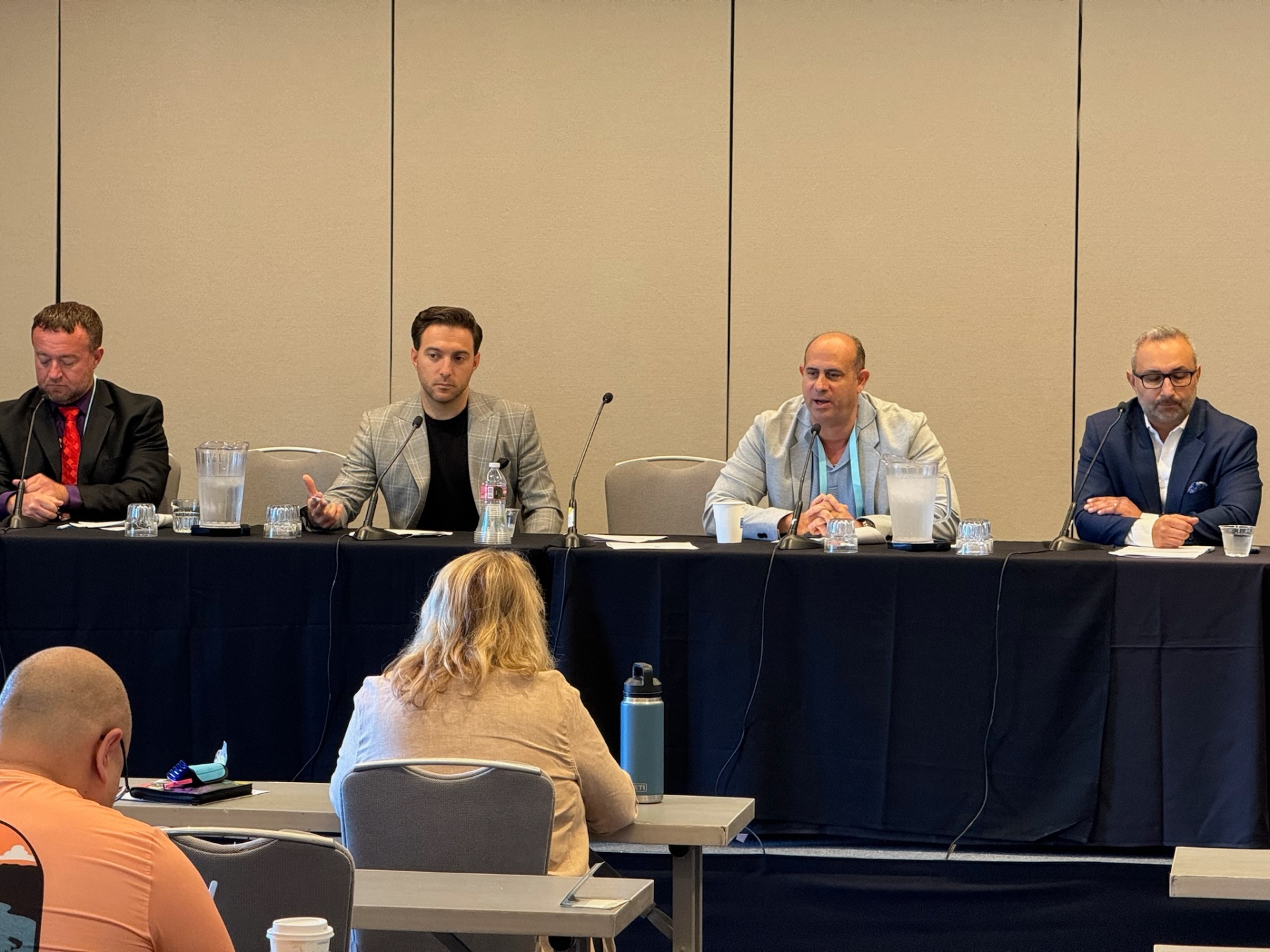
In your community. In your office.
Alexander speaks regularly at CalChiro events, state association gatherings, and individual practice trainings. Documentation best practices, lien protection, case value drivers, and the legal landscape — bring us in, we'll bring the coffee.
Questions from DCs.
What should I do if the attorney tries to cut my bill at the end of the case?+
Do not wait until the settlement is already disbursed and then accept whatever number the attorney gives you. Ask for a written explanation of the proposed reduction, the settlement amount, the attorney's fee, the case costs, the other medical bills, and the client's expected net recovery. A legitimate reduction request should be based on the economics of the actual case — not simply because cutting the doctor is the easiest way for the lawyer to increase the client's net or protect the lawyer's fee. I believe doctors deserve transparency, communication, and a seat at the table. That said, truly pro-chiropractic PI attorneys don't cut DC bills, they just pay them.
What should I do if an attorney intercepts my patient's MedPay benefits?+
Act immediately. MedPay is intended to pay medical expenses, not become an additional source of attorney fees or settlement leverage. Send the attorney written notice of your assignment of benefits, payment authorization, lien, and any prior communications concerning MedPay. Ask the patient to confirm in writing that the benefits were intended to pay your bill. An attorney should not quietly collect money earmarked for treatment and leave the provider unpaid. My office treats MedPay as your money and works with the treating doctor from the beginning so there are no surprises at the end.
How can I tell whether a PI attorney will protect my bill?+
Watch what the attorney does before the case settles. Does the lawyer return your calls? Provide prior records? Discuss insurance limits problems before they become fatal? Keep you informed about settlement? Lawyers who ignore doctors during the case usually become very interested in them when they need a large reduction. I view the treating chiropractor as the quarterback of the treatment team. Good communication protects the patient, improves the case, and prevents unnecessary fee disputes.
What records matter most in a personal injury case?+
The most valuable records are not necessarily the longest. They are the records that clearly establish the patient's condition before the trauma, the mechanism of injury, the onset of symptoms, objective findings, functional limitations, treatment provided, response to care, and reason for any referral or continued treatment. Generic notes, repeated language, unexplained gaps, and treatment plans that never change are gifts to the defense. Your records should tell the story of the patient's recovery — or explain why the patient did not recover — as clearly as you would explain it to a jury.
How do I defend a gap in treatment?+
First, identify the reason. Did the patient improve temporarily? Lose transportation? Have difficulty obtaining authorization? Travel? Become ill? Have family obligations? Struggle financially? A gap without an explanation looks like recovery. A gap with a credible explanation is simply part of the patient's story. Ask about gaps when the patient returns and document the answer accurately. Do not manufacture an excuse, but do not leave an obvious issue unexplained either. Defense attorneys love mysteries. Good PI lawyers and good doctors eliminate them early.
When should I refer a patient for an MRI or specialist evaluation?+
When the clinical presentation justifies it — not because every PI patient needs expensive care, and not because an insurance adjuster prefers that no patient receive it. Persistent neurologic complaints, weakness, radicular symptoms, suspected fracture, significant extremity injury, concussion symptoms, unusual pain patterns, failure to improve, or symptoms inconsistent with a routine strain may warrant imaging or referral. The key is clinical reasoning. A well-documented referral strengthens the case because it shows the patient moved through an appropriate continuum of care. An unexplained referral chain looks lawyer-driven. A medically justified referral chain looks like good medicine.
What should I do when I suspect a traumatic brain injury?+
Take it seriously and document it immediately. Headaches, dizziness, memory problems, light sensitivity, visual changes, sleep disruption, balance problems, emotional changes, altered speech, loss of smell, and difficulty with executive function may be significant even when initial imaging is normal. Chiropractors are often the first providers to recognize that a patient's problems extend beyond neck and back pain. Document the complaints, perform appropriate screening within your scope, and refer promptly to qualified specialists (and don't forget to communicate with the PI attorney). Early recognition can change both the patient's outcome and the litigation.
How should I deal with preexisting degeneration or prior injuries?+
Do not hide them. Preexisting conditions are not case killers; credibility problems are. The law generally allows an injured person to recover when trauma aggravates or worsens a preexisting condition. The important question is what changed after the accident. Identify the patient's prior symptoms, treatment, level of function, and periods of stability. Then document the post-accident difference. "The patient had degeneration" is not the end of the analysis. Many people have degeneration without disabling pain. The litigation issue is whether this trauma made the condition symptomatic, accelerated it, or materially worsened the patient's functioning.
Can social media really damage my patient's case?+
Absolutely. Defense firms routinely search social media for vacations, exercise, dancing, sporting events, home projects, and anything else they can use to argue that the patient is exaggerating. A photograph captures one second; it does not show the pain before, during, or after the activity. Your records can provide that missing context. Ask patients about major travel and activities. Document flare-ups, accommodations, limited participation, and the difference between being able to do something once and being able to do it comfortably or consistently. Patients do not have to stop living, but they do need to stop pretending that social media is private.
What should I do if the patient is not improving?+
Do not continue the same treatment indefinitely and hope nobody notices. Reevaluate. Change the treatment plan when appropriate. Consider additional imaging, a specialist referral, a different modality, home exercise, active rehabilitation, or discharge if further chiropractic care is no longer benefiting the patient. One of the defense's favorite arguments is that the doctor delivered repetitive treatment without measurable improvement. The strongest record shows active clinical judgment: what was tried, whether it worked, what changed, and why the next step was reasonable.
What if the insurance company says my care was not medically necessary or my charges were too high?+
Ask them to be specific. Which treatment was allegedly unnecessary? On what date? Based on what record? What alternative care do they contend should have been provided? What data supports their proposed fee? Boilerplate reductions often survive because nobody forces the carrier to defend them. Your best response is a clear record showing the clinical basis for the care, the patient's measurable progress, the complexity of the case, and the reason treatment continued. My office does not simply accept an insurer's computer-generated reduction as medical truth. When the care is justified, we build the record to prove it.
When should a chiropractor call a PI attorney about a problem case?+
Before the problem becomes irreversible. Call when the patient gives an inconsistent history, misses significant treatment, reports a prior accident, develops neurologic symptoms, receives a suspicious referral, stops responding, changes lawyers, asks you to alter records, receives MedPay, or tells you the attorney is pressuring them in a way that concerns you. Early communication allows everyone to protect the patient and the integrity of the case. I would much rather answer a five-minute question today than spend five hours trying to repair a preventable problem two years from now.
Can a chiropractor help increase the value of a personal injury case?+
Yes — but not by inflating treatment, exaggerating findings, or writing advocacy disguised as medicine. Case value comes from credibility. A chiropractor adds enormous value by identifying injuries early, documenting functional loss, tracking progress, recognizing red flags, coordinating appropriate referrals, and explaining the clinical significance of the trauma in plain English. The best treating doctors do not "build" cases. They build trustworthy medical records. Good lawyers know how to use those records.
Why should I refer a PI patient to a pro-chiropractic attorney?+
Because they understand that the lawyer-doctor relationship should be collaborative, transparent, and mutually respectful. You should refer cases to an attorney who has spent years working with chiropractors, lecturing on PI litigation, studying the attacks insurance companies use against chiropractic care, and teaching doctors how to make their records stronger. Someone who does not view treating providers as vendors to be ignored until settlement. Someone who views them as essential partners in presenting the client's medical story. Someone whose goal is to maximize the client's recovery, protect legitimate medical charges, communicate throughout the case, and resolve problems directly rather than create them through silence. *hint hint*
Send us a referral.
Alexander receives every referral personally. Same-day sign-up. You'll hear back today.
Coffee, lunch, or a Zoom — however you prefer. I love to tour a DC office and see how you work.